Sent home for a week? Don't waste the commute.
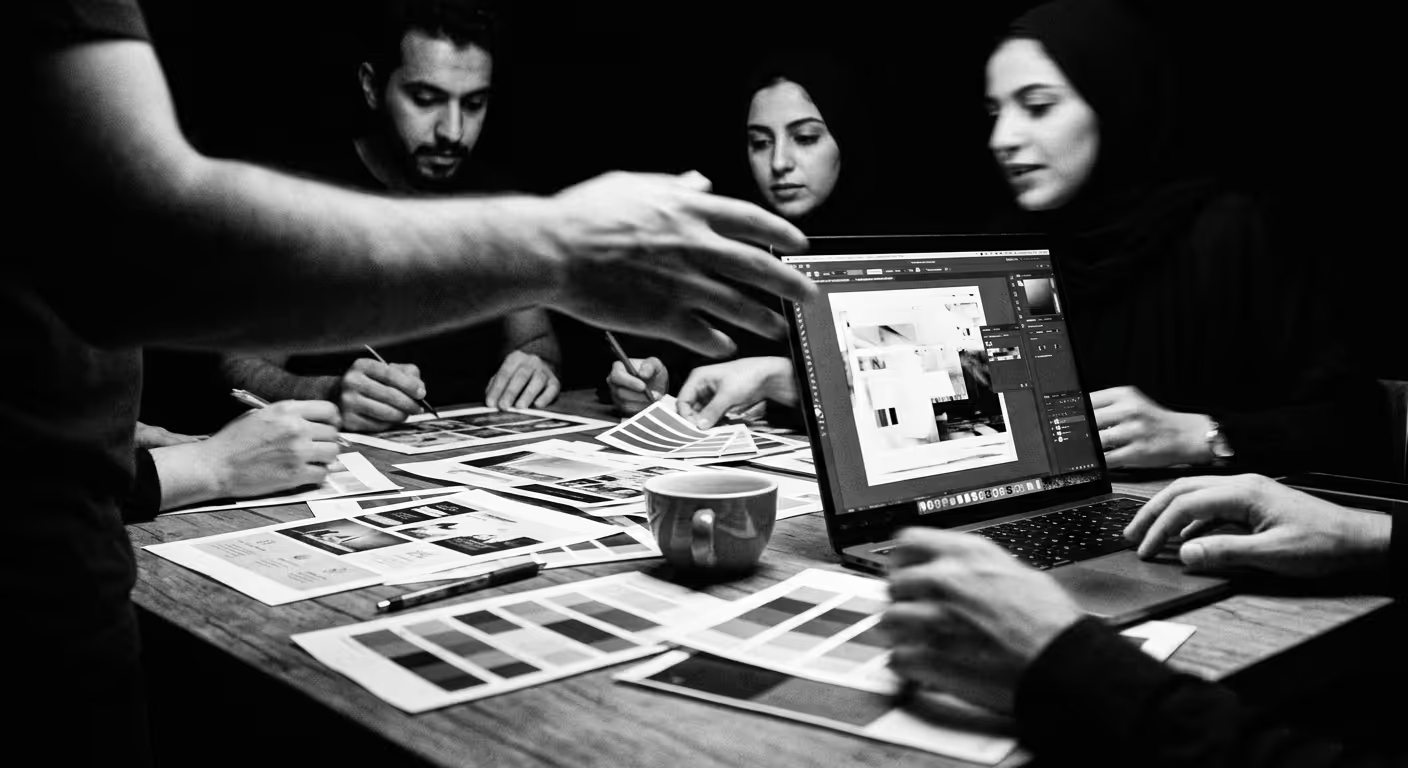
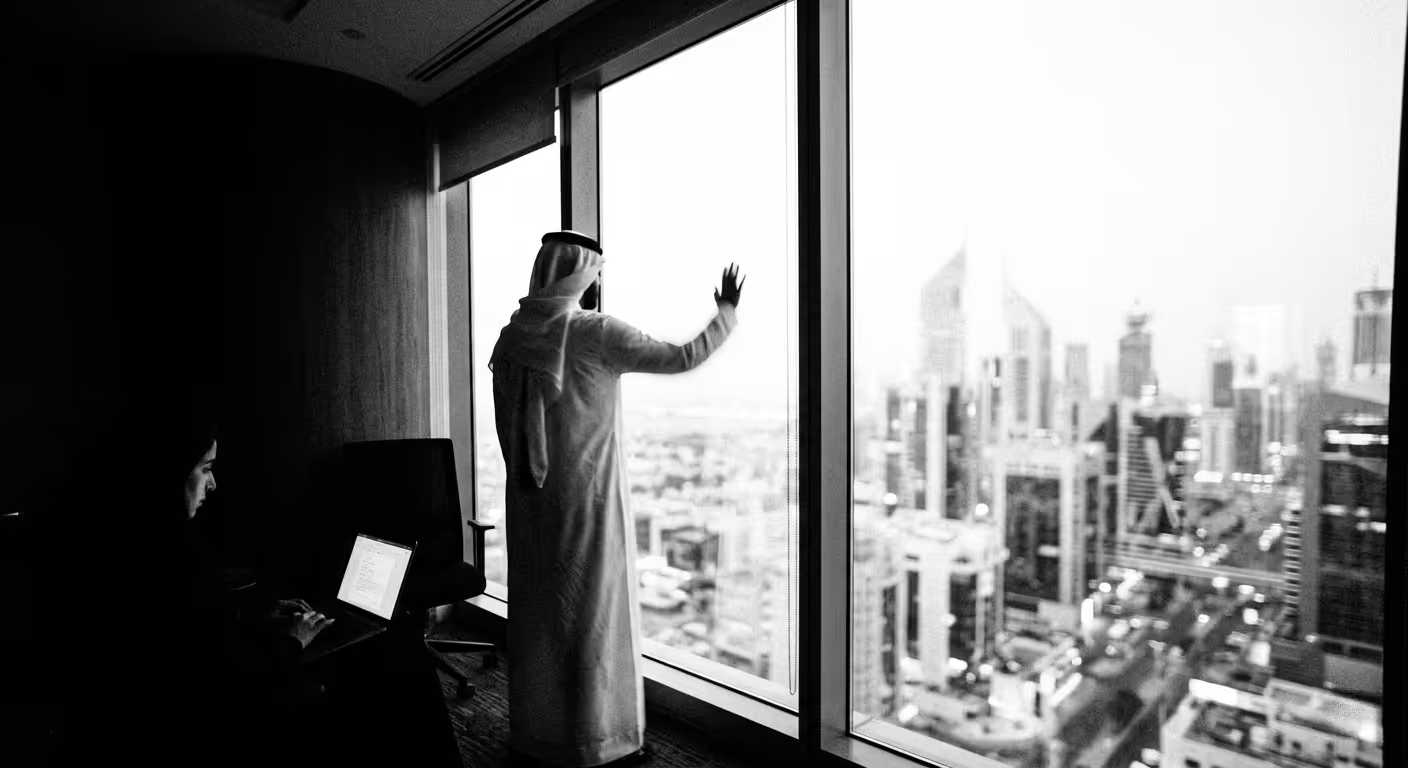
A lot of people across Abu Dhabi and Dubai have been told to work from home this week. The instinct, for a certain type of operator, is to replicate the office as faithfully as possible. Back-to-back calls. Full diary. Maximum output.
I would push back on that.
The most underrated thing about a commute is not the journey. It is the thinking time either side of it. The walk to the station. The drive. The twenty minutes where your brain is moving but not performing. When that disappears and the laptop opens directly into a video call, you lose something that most people do not notice until it has been gone for a while.
COVID taught me this. The people I watched come out of that period strongest were not the ones who filled every hour. They were the ones who protected a little time first, decided deliberately how to use it, and then went to work. The ones who immediately converted their commute into one more meeting came out the other side exhausted and, in many cases, no further forward.
So if you have been sent home this week, here is my honest suggestion: before you do anything else, protect the time you have been given back. Then choose how to use it across two buckets.
The first is your business. This is the moment to look at things the diary never allows. Pull up the last month of your calendar and ask honestly where the time actually went. Map the decisions you make every week and ask which ones could be delegated, automated, or eliminated. If you have been meaning to get your AI tools working as a coherent system rather than a collection of half-finished experiments, this is the week. Individually these things take an hour. Together they compound. At 47X this is exactly the kind of work we do inside portfolio companies when they finally create the space to look at how they actually operate. It is remarkable how rarely it happens otherwise.
The second bucket is everything else. Your network, properly. Not a broadcast LinkedIn post but the message you have been meaning to send for three months. The international call that never lines up across time zones. The five people who helped you this year and never heard that it mattered. One of the clearest things I took from COVID was that the relationships I had invested in quietly, over time, without agenda, were the ones that came back in unexpected ways when the world reopened.
And then the genuinely human things. The book you have been deferring. The guitar that has been sitting in the corner. The afternoon with your family that does not require justification or a slot in the diary. The best operators I know are not the ones who are always on. They are the ones who protect the time to be off, and come back sharper for it.
Disruption is uncomfortable. But it is also one of the few things that genuinely forces a pause. The question is whether you use it or just wait for the calendar to fill back up.